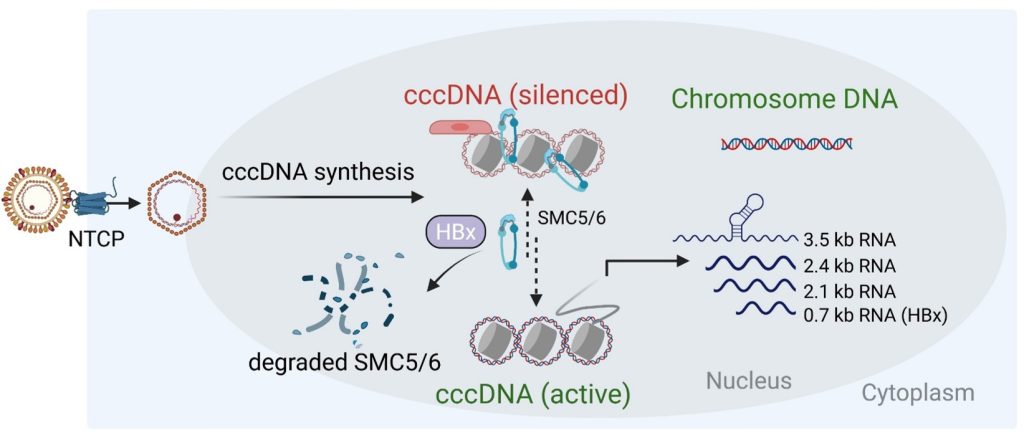

Investigate How Hepatitis B Virus Evades Host Defense –The Tang Laboratory investigates the molecular interplay between HBV and host cells that determines the outcome of infection and enables viral persistence. A major focus of our research is the interaction between the viral regulatory protein HBx and the host restriction complex SMC5/6, a cellular defense system that restricts the transcription of episomal DNA, including HBV covalently closed circular DNA (cccDNA). HBV counteracts this antiviral defense through HBx, which hijacks the cellular ubiquitin–proteasome pathway to promote SMC5/6 degradation and reactivate viral gene expression.
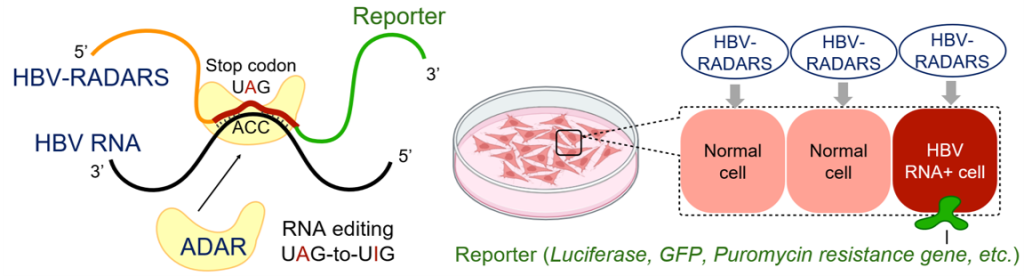
The molecular features of HBx that drive this process, as well as the cellular mechanisms that regulate cccDNA transcriptional states, remain incompletely understood. Using innovative cell-based platforms, functional genomics, proteomics, and molecular virology, we seek to elucidate how HBx controls viral transcription, how host cells respond to episomal viral DNA, and how these pathways can be therapeutically targeted. Our long-term goal is to advance the development of next-generation HBx-targeted therapies that restore durable host control of HBV and contribute to a cure for chronic hepatitis B.